New to Worldschooling?
If the idea of worldschooling sounds beautiful but also a little overwhelming, you’re not alone. Even as seasoned homeschoolers the idea of worldschooling seemed daunting. I’m going to break down the “need to knows” and help you break the fears you may having as you plan out your worldschooling adventures.
For a lot of parents, it starts as a quiet thought: What if learning didn’t have to happen inside four walls? What if our kids could learn from the world itself?
Then the next thought usually follows: But how would that even work?
That’s exactly what this page is for.
Worldschooling doesn’t have to be complicated, rigid, or look like someone else’s perfect Instagram version of family travel. At its core, it’s simply learning through life, experience, and the world around you.
What Worldschooling Actually Is
Let’s strip away the intimidating label for a second.
Worldschooling is not about recreating a classroom while sitting in a café in another country.
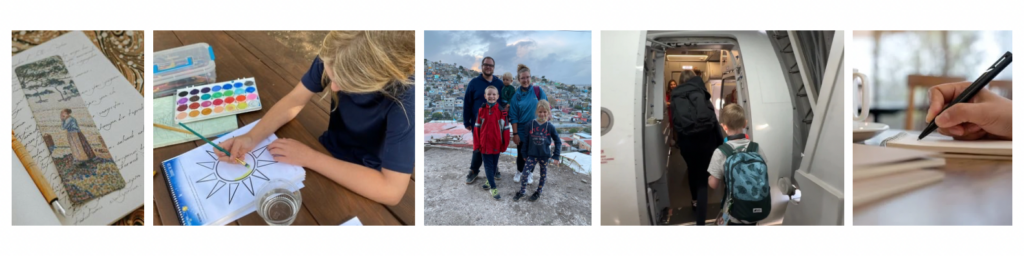
It’s about helping your children learn through real-life experiences, conversations, culture, travel, and everyday moments that naturally spark curiosity.
Sometimes learning looks like:
- reading signs in another language
- counting currency at a local market
- learning history while standing in the place it happened
- talking about geography with a map open at breakfast
- exploring marine life at the beach
- observing animals, plants, and ecosystems in nature
- asking questions and following curiosity
It’s less about worksheets and more about connection.
Children remember what they experience.
A history lesson in a book is one thing.
Standing in the ruins, hearing the sounds, and asking questions in real time is something else entirely.
That’s where worldschooling becomes powerful.
What It Looks Like With Real Kids
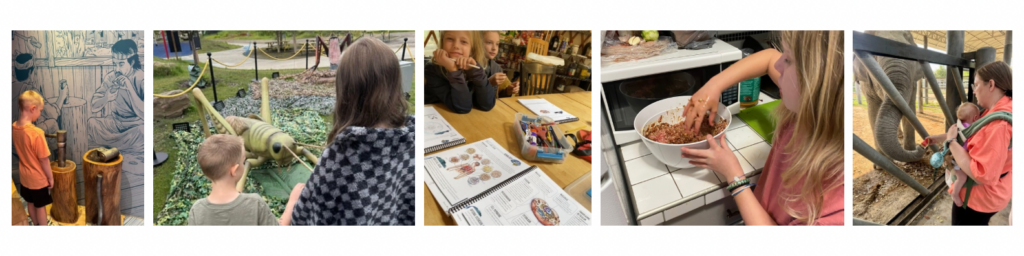
This is the part where many moms panic because they assume it has to look the same for every child. It absolutely does not. In our family, we have a teens, a pre-teen, a younger kid, and a baby, which means learning looks different for everyone, sometimes even on the same day.
A teen might be:
- working on animation
- gaming strategy and problem solving
- researching culture or history
- journaling thoughts from travel
A pre-teen may naturally lean into:
- sketching what she sees
- learning about animals and ecosystems
- creative writing and storytelling
- photography
A younger child might be learning through:
- hands-on play
- conversations
- maps
- sensory experiences
- movement and exploration
And the baby?
Honestly, the baby is worldschooling too, just in the beautifully chaotic way babies do. New foods, new sounds, new languages, new faces, new rhythms. Learning begins long before formal academics.
That’s the beauty of this lifestyle. The learning is already happening. You’re simply becoming more intentional about noticing it.
Common Fears (Let’s Talk About Them)
It’s okay to be afraid. In fact, if you’re feeling hesitant, that’s a sign you’re paying attention—and that’s good. But let’s unpack some of the biggest worries that almost kept us stuck, too.
What about curriculum?
One of the first questions I asked myself was, “What will we even teach them?” The truth is, you don’t need a rigid curriculum on day one. Start simple: focus on literacy, math, and a few core subjects. Then let curiosity guide you. There are so many flexible resources—online courses, local classes, even museum trips—that can become the spine of learning.
What if they fall behind?
We’re so used to measuring success by school years and grade levels, but that’s just one path. What if falling behind is just a story we tell ourselves to stay safe? Kids who learn through life develop in different ways. Yes, they might not always follow a traditional timeline, but they often catch fire in unexpected ways—creativity, resilience, adaptability. They’ll get where they need to be, and you’ll be there, walking alongside them.
What about socialization?
Oh, the socialization question—probably the most tired myth in education. Socialization is about more than recess with 25 peers. It’s about connecting with diverse people, traveling to new cultures, and having conversations with people outside your age group. In fact, many families say their kids are more socially mature, learning to navigate different languages, customs, and ways of thinking.
What about routine?
Routine is still your friend, but it doesn’t have to be rigid. We anchor our days around a flexible rhythm: a few hours for core learning, then afternoons exploring a new city or culture. The point is not a perfect schedule—it’s a steady beat that gives kids security while still letting the world in.
These are the fears that almost kept us from starting too. But once we got moving, we realized something important: none of these fears need to paralyze you. You don’t need perfect answers, just one small step. And each step you take, you’re showing your kids that learning—and life—happens as you go.
Where to Begin When You’re Not Ready
If you’re feeling the pull toward a different way of life, the next question is usually: Where do we even begin?
The good news is you do not need to map out the next year, the next country, or the next curriculum before you start. You just need a first step. Keep it simple. Keep it gentle. Let this begin with clarity, not pressure.
1. Start With Your Why
Before you choose a destination, a curriculum, or a suitcase, start with the heart behind it.
Ask yourself: Why are we considering this?
Is it:
- more time together as a family?
- healing from school burnout?
- a desire to travel?
- a slower life?
- wanting your kids to experience the world differently?
- feeling called by God into something unfamiliar but deeply aligned?
Write it down. Not the polished version. The honest version.
Maybe it sounds like: “I don’t want to keep waiting for someday.”
Or: “I want my kids to remember a life we actually lived together.”
Your why becomes your anchor when things feel uncertain. Because they will. When you’re tired, second-guessing, or wondering if you’ve lost your mind, your why brings you back to the reason you started.
2. Choose a Learning Rhythm
Please do not try to recreate traditional school while traveling. That way lies exhaustion and tiny human mutiny. Instead, choose a gentle rhythm. Not a rigid schedule. A rhythm. Something that supports your family without controlling your life.
A simple starting point might be:
- 2–3 core academic focuses
reading, writing, math - daily reading time
independent, family read-aloud, audiobooks - real-world exploration
museums, markets, nature walks, cultural sites
For example:
Morning: reading + math
Afternoon: explore
Evening: reflect / journal / talk about what you learned
This gives structure without stealing the joy. Remember: consistency matters more than perfection.
3. Let Travel Become the Classroom
This is where worldschooling becomes beautiful. Learning is already happening. You’re just learning how to notice it. The world is full of opportunities:
At the market
- math through currency conversion
- communication
- cultural exposure
- food systems
On travel days
- geography
- time zones
- maps
- budgeting
- logistics
In museums and historical sites
- history
- storytelling
- art
- culture
- critical thinking
In nature
- science
- ecosystems
- weather
- biology
- observation
Through daily life
- languages
- problem solving
- confidence
- adaptability
Sometimes the best lesson of the day is simply: “How do people live here?” That question alone opens so much. The world does a remarkable amount of the teaching for you.
4. Talk as a Family
This one matters more than people think. Don’t carry the dream alone. Bring everyone into the conversation.
Ask questions like:
- What are you excited about?
- What feels scary?
- What do you want to learn?
- What places interest you?
- What would make this feel safe?
This is especially important with teens and pre-teens. Kids handle change better when they feel included. They don’t need every answer. They need honesty and involvement.
Sometimes their questions will surface things you haven’t thought through yet, which is annoying but useful, like most children.
5. Start Smaller Than You Think
You do not need to sell everything tomorrow. You do not need to book six countries. Start with something manageable.
Examples:
- a one-week trip
- one month abroad
- a local “worldschool” week in your own city
- testing a flexible homeschool rhythm at home first
The goal is not to prove you can live this forever. The goal is to prove to yourself that a different way is possible. Momentum matters. Confidence often comes after action, not before it.
6. Keep Expectations Low at First
This is the part people hate hearing, but it’s the most freeing. The first month is probably going to be messy. Someone will be tired. Someone will be emotional. Someone will question the whole plan. Possibly all before breakfast. That does not mean it isn’t working. It means you are adjusting.
Leave room for:
- mistakes
- emotional days
- slower mornings
- changed plans
- learning as the parent
The first version does not need to be perfect. It only needs to begin.
A Gentle Reminder
Worldschooling is not about doing more. It’s about seeing what is already happening and trusting that life itself can be a teacher. Your children are already curious. They are already learning. Your role is not to force it. Your role is to create space for it. You do not need every answer before you begin. You just need enough courage for the next step.
That’s where it starts.
To read more about how we started through our own fears, read this blog post here:
Leave a Reply